
KEITH HENGEN, ASsociate PROFESSOR, DEPT. OF BIOLOGY @ WASH U IN STL
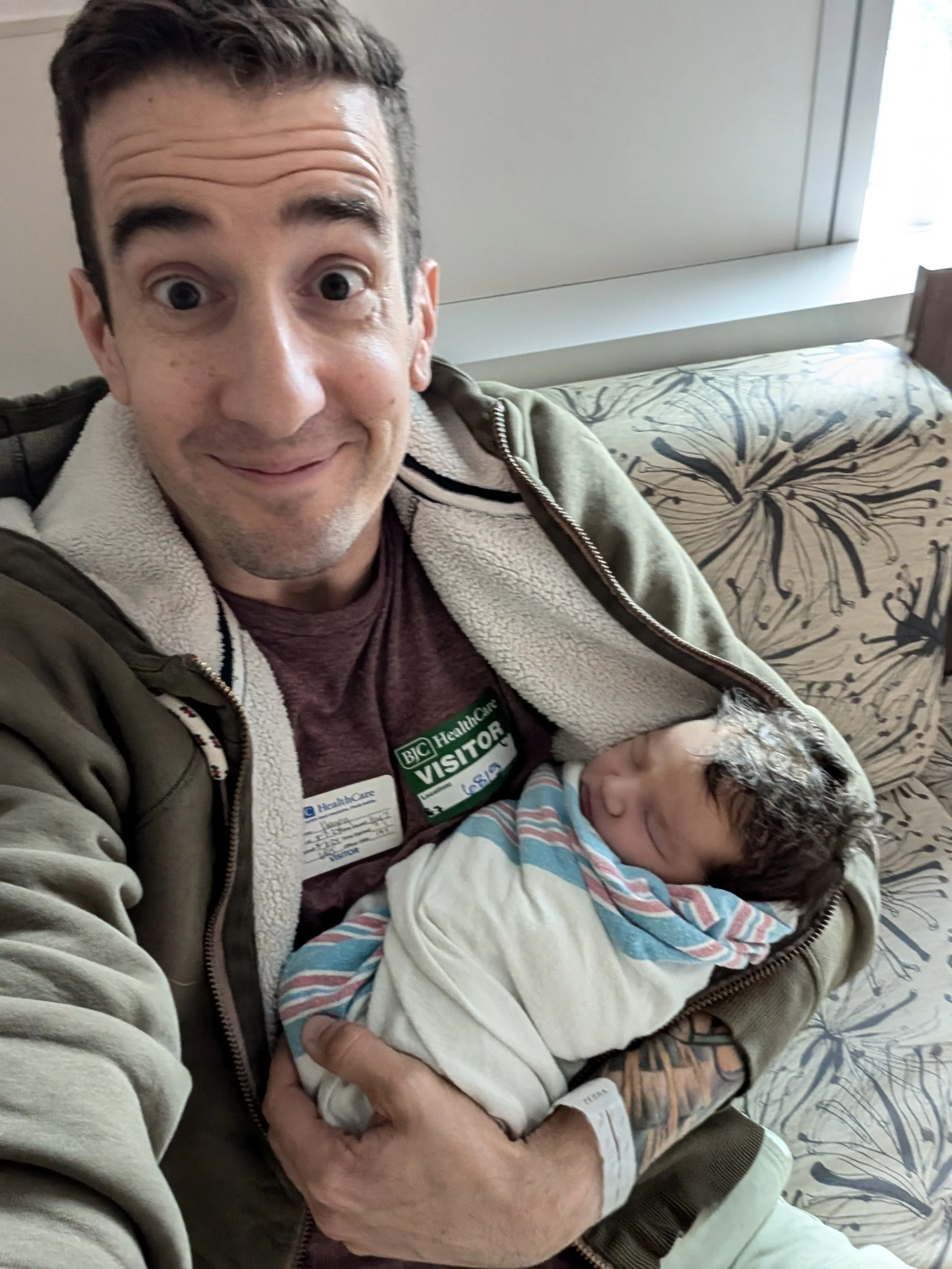
Science keeps me awake at nighT (As do my Children. Ironically, sleep is a problem for me)
I moved to WashU in late 2017. Since then, a brilliant lab has grown around me, pulling me in directions I never anticipated. Now, I believe we have a shot at contributing to one of the biggest questions in neuroscience. Here’s the gist of the problem, as we see it: The brain’s most fundamental challenge is equivalent to competing in a game show without knowing the topic, the format, the level of complexity, the strength of the competition, or even the language. But in this game, losing guarantees death. So, with your life on the line, how might you best prepare? How do you maximize your chances when you’re walking into an unpredictable and arbitrarily difficult task? Luckily, there’s a clear mathematical answer to this question: you pick the point that maximizes your adaptability (rabbit hole). As much as we like to point to genes and cell types, almost nothing that we do is hard wired — there hasn’t been time to evolve circuits for scrolling, skateboarding, or even writing. As a result, the brain must adapt to the world in which it finds itself.
We want to know: are there fundamental principles (if any) that allow a brain to compute anything in the first place?, How does sleep contribute to the computational capacity of the brain?, and, Can studying emergent dynamics in diseases (such as Alzheimer's) lead to earlier diagnoses and an entirely novel class of solutions? Methodologically, we've built a unique set of tools that lets us track hundreds of neurons for months at a time. Many of the most important processes in a brain unfold over long timescales, and now we can watch those with incredible precision.
We’re indebted to and grateful for the support of the National Institutes of Health (NIA, NINDS & BRAIN Initiative), the BrightFocus Foundation, Cure Alzheimer's Fund, and of course, Washington University in Saint Louis.
Thanks for taking the time to check out our site.
———————————-
For fun, here are a few of my favorite papers. If you can find a few minutes, I suspect you’ll enjoy them (you made it this far, after all):
“What Might Cognition Be, If Not Computation?”. This 1995 paper by Tim Van Gelder radically and forever changed my understanding of how the brain must work.
“Effects of remote, retroactive intercessory prayer on outcomes in patients with bloodstream infection: randomised controlled trial”. Leonardo Leibovici’s 2001 work clearly demonstrates that prayer offered in 2000 retroactively improved outcomes for patients who had bloodstream infections between 1990-1996.
“Similar network activity from disparate circuit parameters”. Buckle up… Prinz and Marder tidily sweep away any overly-reductionist assumptions I might have.